
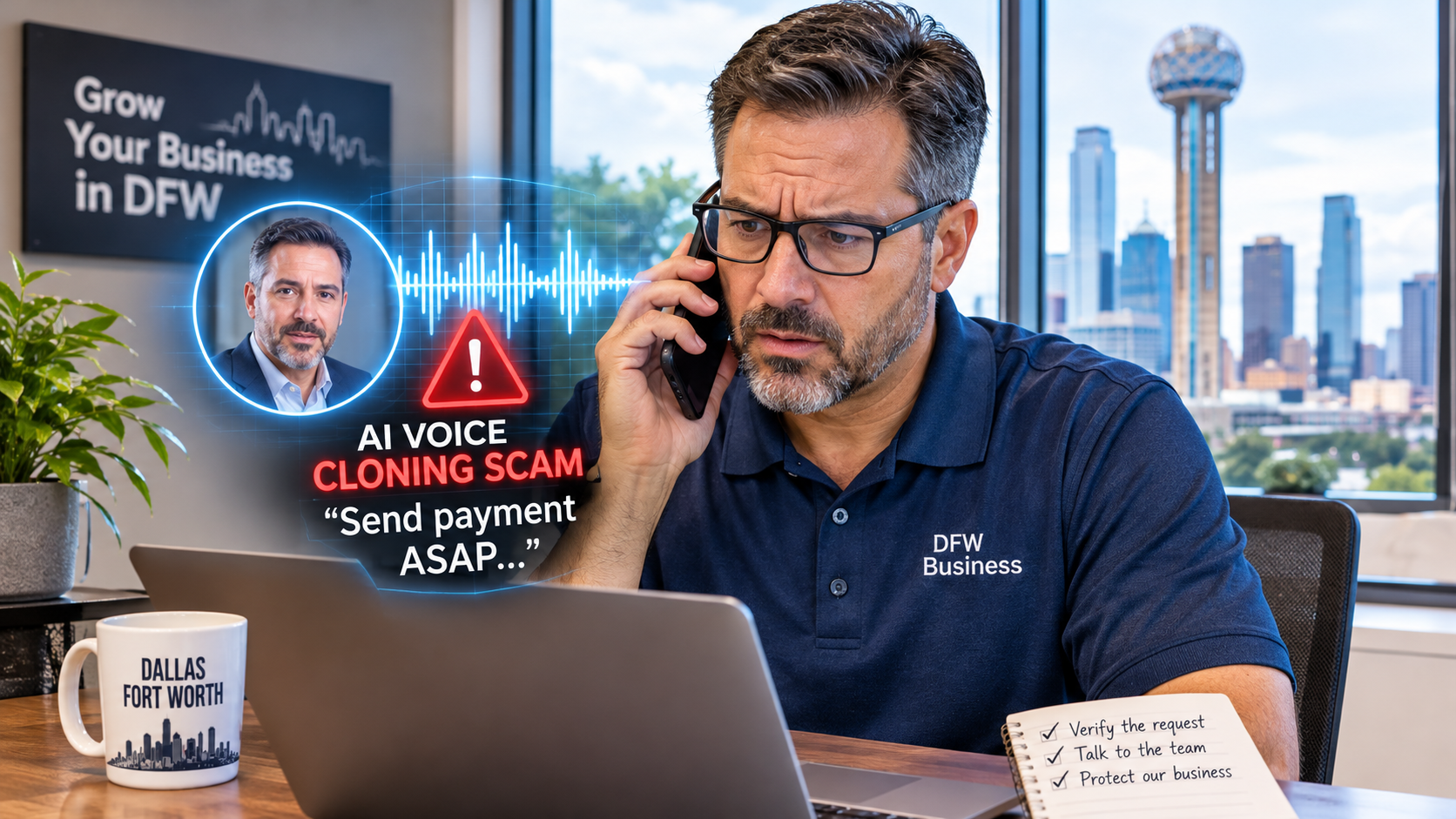
In the growing world of AI, it can sometimes feel like there is almost nothing technology cannot do. From helping businesses save time and money to automating everyday tasks, artificial intelligence is changing how we work and do business. But what happens when this powerful technology falls into the hands of people who use it for the wrong reasons? More disturbing is that businesses in Dallas are not exempted from this new trend. Imagine receiving a phone call from someone who sounds exactly like your business partner, manager, or even your boss. They know your name, understand how your business operates, and make an urgent request for money. You recognise the voice, so you have no immediate reason to suspect anything unusual.But what if that person isn’t who they claim to be? As AI technology becomes more accessible, scammers are finding new ways to imitate people’s voices and use those imitations to deceive unsuspecting individuals and businesses. For small businesses across Dallas, Fort Worth, Plano, Arlington, Irving, and the wider DFW area, this is a risk worth understanding. There is also a local reason to take this seriously.
In September 2026, NBC 5 Dallas-Fort Worth reported that the Garland Police Department was warning residents about increasingly sophisticated AI scams involving generated voices, images and messages. Garland police officer Matthew Pesta explained how AI tools can make impersonation more convincing by allowing scammers to create voices with different tones and speaking styles. The warning is particularly relevant to businesses across the Dallas-Fort Worth area because these scams are not limited to one industry or company size. The FBI’s 2025 Internet Crime Report, released in April 2026, recorded more than one million internet crime complaints and nearly $21 billion in reported losses. The report also identified 22,364 complaints involving AI, with reported losses approaching $893 million. These figures cover AI-related complaints broadly, not voice cloning alone. However, they show why businesses should take AI-enabled fraud seriously. At Local SEO GMB Marketing, we appreciate how AI can help businesses improve efficiency, reduce operating costs, and reach more customers. However, embracing AI also means understanding its risks and taking practical steps to protect your business. In this article, we’ll explain how AI voice cloning scams work, how scammers may target businesses, and what you can do to protect your employees, customers, finances, and business reputation.
What Is AI Voice Cloning?
AI voice cloning is technology that uses artificial intelligence to create a digital imitation of someone’s voice. The technology analyses voice characteristics, including tone, pronunciation, speaking patterns, and other audio features, to generate speech that sounds like the original speaker. There are legitimate uses for this technology. Businesses may use synthetic voices for approved marketing content, accessibility, training materials, and customer communication. The problem begins when someone uses another person’s voice without permission to deceive people. For example, a scammer could imitate a business owner, financial manager, company director, or customer to make a fraudulent request sound genuine. According to the Federal Trade Commission (FTC), voice cloning can create significant risks, including fraudulent requests for money and the misuse of someone’s voice and personal information. The FTC even organised a Voice Cloning Challenge to encourage the development of solutions that could help prevent, detect, and evaluate harmful voice cloning. The message is simple: this technology has useful applications, but businesses need safeguards against misuse.

How Do AI Voice Cloning Scams Target Dallas Businesses?
You don’t have to operate a large corporation to become a target. Small businesses can also be vulnerable, particularly when a few employees handle payments, customer enquiries, supplier relationships, and business accounts.
Here are some situations worth watching.
1. Fake Calls From Business Owners
A scammer may impersonate a business owner or senior manager and contact an employee with an urgent request. For example, a Dallas construction company employee receives a call from someone who sounds like the owner. The caller requests an urgent payment for materials needed at a job site. Because the employee recognises the voice, they may feel comfortable following the instruction without checking further. The problem is that recognising someone’s voice is no longer enough to confirm their identity.
2. Fake Supplier and Vendor Calls
Imagine your Fort Worth business regularly purchases materials from the same supplier. One afternoon, someone calls claiming that the supplier has changed its banking details. The caller sounds familiar and knows details about your business relationship. They ask you to send the next payment to a different account.If your business processes the payment without independently confirming the change, you could lose money. This type of fraud can also involve fake emails and messages alongside cloned voices.
3. Fake Customer Support Calls
A scammer may pretend to represent a bank, software provider, payment processor, or another service your business uses. They might claim there’s a problem with your account and ask an employee to confirm login information or provide sensitive business details. A convincing voice can make the conversation feel legitimate. Never assume a caller is genuine simply because they sound professional or know your business information.
4. Impersonating Employees or Customers
Businesses that depend on phone communication can also face impersonation attempts involving employees or customers. For example, someone may pretend to be an employee who needs urgent access to an account. Another caller may impersonate a customer and request changes to contact information or payment arrangements. Without proper verification, employees may unknowingly expose business information or approve unauthorized requests.
7 Practical Ways Dallas-Fort Worth Businesses Can Protect Themselves
The good news is that you don’t necessarily need an expensive security system to start improving your protection. Small changes to your business processes can make a meaningful difference.
Here are seven practical steps.
1. Create a Business Verification Code
One of the simplest precautions is to establish a private verification phrase for sensitive business instructions. For example, your management team could agree on a verification process that employees use whenever someone requests an unusual payment, changes supplier banking details, or asks for sensitive information. Keep verification details private and don’t share them publicly or through unsecured business channels. Remember, the verification phrase should be combined with other checks rather than treated as your only security measure.
2. Never Approve Payments Based on a Phone Call Alone
This is particularly important for small businesses. Whether you run a real estate company in Dallas, a construction business in Arlington, or a professional services firm in Plano, payment approvals should follow a consistent procedure.
Before sending money:
- Confirm the request through a previously verified contact method.
- Check any changes to supplier payment details independently.
- Require additional approval for large or unusual transactions.
- Document who authorised the payment.
- Never allow urgency to replace your normal financial procedures.
A two-person approval process for significant payments can also reduce the risk of one employee making a costly mistake.
3. Be Careful About What Your Employees Share Online
Think about how much information your business publishes online. Your website may contain staff names, photographs, interviews, promotional videos, customer testimonials, and recorded presentations. Your social media pages may also feature employees speaking about their work. This content is useful for marketing, but publicly available audio and video can potentially be misused to impersonate people.
You don’t need to stop publishing business content. Instead:
- Obtain permission before using employees’ voices in AI-generated content.
- Avoid publishing unnecessary personal information.
- Review who can access your business social media accounts.
- Train employees to recognise impersonation attempts.
- Establish rules for using company photographs, recordings, and voice data.
The goal is to use digital marketing responsibly without exposing unnecessary information.
4. Train Your Employees to Question Unusual Requests
Your employees are an important part of your business security. A receptionist, accountant, marketing assistant, or customer service representative could receive a suspicious call without realising what’s happening.
Teach your team to pause when a caller:
- Requests an unexpected payment.
- Demands immediate action.
- Asks for passwords or confidential information.
- Requests a change to supplier banking details.
- Discourages independent verification.
Make it clear that employees will not be punished for taking extra time to verify an unusual request. A few minutes of verification can save a business from a significant financial loss.
5. Secure Your Business Email and Online Accounts
Voice cloning doesn’t always happen in isolation. Scammers may combine fake calls with phishing emails, impersonated social media accounts, or compromised business email accounts. For example, someone could send an email that appears to come from your business owner immediately after making a fake phone call.
Protect your accounts by:
- Enabling multi-factor authentication (MFA).
- Using strong, unique passwords.
- Limiting account access to authorised employees.
- Reviewing unfamiliar login notifications.
- Keeping business software and devices updated.
- Removing access when an employee leaves.
These steps are useful whether you operate a small business in Dallas or manage several locations across DFW.
6. Establish a Procedure for Suspicious Calls
Don’t wait until someone loses money before deciding what to do. Create a simple procedure that employees can follow whenever they suspect an impersonation attempt.
For instance:
- End the conversation if the request seems suspicious.
- Do not disclose confidential information.
- Contact the person using a previously verified phone number.
- Report the incident to the appropriate manager.
- Preserve relevant messages, emails, and call records.
If money has already been transferred, contact your financial institution immediately and ask whether the transaction can be stopped or recalled.
You should also report suspected cyber-enabled fraud to the FBI’s Internet Crime Complaint Center (IC3) at www.ic3.gov.
7. Review Your AI Tools Before Using Them
AI can make everyday business operations easier, but not every tool is suitable for every business. Before adopting an AI voice tool, chatbot, automated calling system, or other AI service, consider:
- What information does the tool collect?
- Does it store customer or employee recordings?
- Who can access the information?
- Does the provider explain how voice data is protected?
- Can employees control how the tool is used?
- Does the tool require consent before using someone’s voice?
Avoid uploading customer or employee recordings into unfamiliar platforms without understanding their privacy and security policies. You can still benefit from AI automation while being careful about the information you share.
What Should You Do If Your Business Receives an AI Voice Cloning Scam Call?
First, don’t panic. A convincing voice does not automatically mean the caller is genuine. If someone claims to be your business owner, supplier, employee, or financial institution, independently verify their identity before taking action. If you have already shared sensitive information or authorised a suspicious payment, take immediate steps:
- Contact your bank or payment provider.
- Report unauthorized transactions.
- Change passwords for affected accounts.
- Enable or reset multi-factor authentication.
- Notify affected employees and relevant business partners.
- Preserve evidence of the communication.
- Report the incident to the appropriate authorities.
Also remember that simply saying “yes” during a suspicious phone call does not automatically mean a scammer can legally authorise a payment or sign you up for a service. However, if you suspect you’ve been deceived, check your accounts and contact your financial institution if necessary.
How Can AI Help Businesses Without Increasing Security Risks?
AI isn’t something businesses should automatically avoid. A Dallas business can use AI responsibly to reduce repetitive tasks, improve customer communication, organise information, and make everyday operations more efficient. For example, a business might use automation for appointment reminders, customer enquiry management, reporting, and routine follow-ups. However, it’s important to distinguish between automating routine tasks and allowing technology to make sensitive decisions without human oversight. For additional ideas, read our article on 6 Digital Marketing Tasks Small Businesses in DFW Should Automate First. The best approach is to use AI where it makes business sense while maintaining human approval for sensitive activities such as payments, account access, and confidential customer information.
At Local SEO GMB Marketing, we encourage businesses to think beyond simply adopting new technology. Consider how it affects your customers, business operations, online reputation, and long-term costs.
Protect Your Business Before a Scam Happens
AI voice cloning is another reminder that business security needs to evolve alongside technology. You may run a small landscaping company in Garland, a real estate business in Frisco, a medical practice in Plano, or a professional services company in Fort Worth. Your business can benefit from AI, but you should also understand how criminals may misuse it. You don’t have to spend thousands of dollars immediately to improve your protection. Start with employee awareness, payment verification, secure accounts, clear business procedures, and responsible AI use. Most importantly, never allow a familiar voice or an urgent request to replace proper verification.
Want to make better use of AI and digital tools while keeping your business operations more organised?
Local SEO GMB Marketing works with businesses across Dallas-Fort Worth to improve their online visibility, Google Business Profile presence, and digital marketing strategies.
Visit https://www.localseogmbmarketing.com/ to learn more about our services.
You can also request a free Google Business Profile (GBP/GMB) audit to review your business’s online presence.
Contact Local SEO GMB Marketing
Website: https://www.localseogmbmarketing.com/
Email: gmb@localseogmbmarketing.com
Phone: +1 682-356-3111
Serving Dallas, Fort Worth, Plano, Arlington, Irving, Frisco, Richardson, Garland, and surrounding DFW communities.
Frequently Asked Questions About AI Voice Cloning Scams
1. What is AI voice cloning, and how does it work?
AI voice cloning uses artificial intelligence to create a digital imitation of a person’s voice. It analyses characteristics of recorded speech and generates new audio that can sound similar to the original speaker. While it has legitimate uses, criminals can misuse it to impersonate people and commit fraud.
2. Can scammers clone a business owner’s voice?
Yes. Criminals may use publicly available recordings, such as interviews, social media videos, and business presentations, to create convincing voice imitations. They may then use those voices to make fraudulent payment requests or obtain confidential information.
3. Are free AI voice cloning tools safe?
Not necessarily. Free AI tools can have different privacy, consent, and data-handling policies. Businesses should review a provider’s terms before uploading recordings, especially when those recordings contain employee or customer information. Never assume that a free tool automatically provides adequate protection
4. What should I do if I accidentally said “yes” to a scammer?
Don’t assume that saying “yes” automatically gives a scammer access to your money. However, if you suspect the call was fraudulent, avoid following further instructions, monitor relevant accounts, and contact your bank if you disclosed financial information or notice an unauthorized transaction. Report suspected fraud when appropriate.
5. Can website maintenance prevent AI voice cloning scams?
No. Website maintenance cannot stop someone from cloning a voice. However, keeping your website updated, backed up and monitored can help reduce separate website security risks.
6. How can automation help protect my business?
CRM and automation tools can help organise customer communication, enquiries and internal workflows. However, sensitive transactions and changes to payment details should always require independent verification.
Important Disclaimer: This article is provided for general educational and awareness purposes to help Dallas-Fort Worth businesses understand potential AI voice cloning risks. It is advice intended to encourage safer business practices, not a professional cybersecurity assessment, legal opinion, or financial advice.